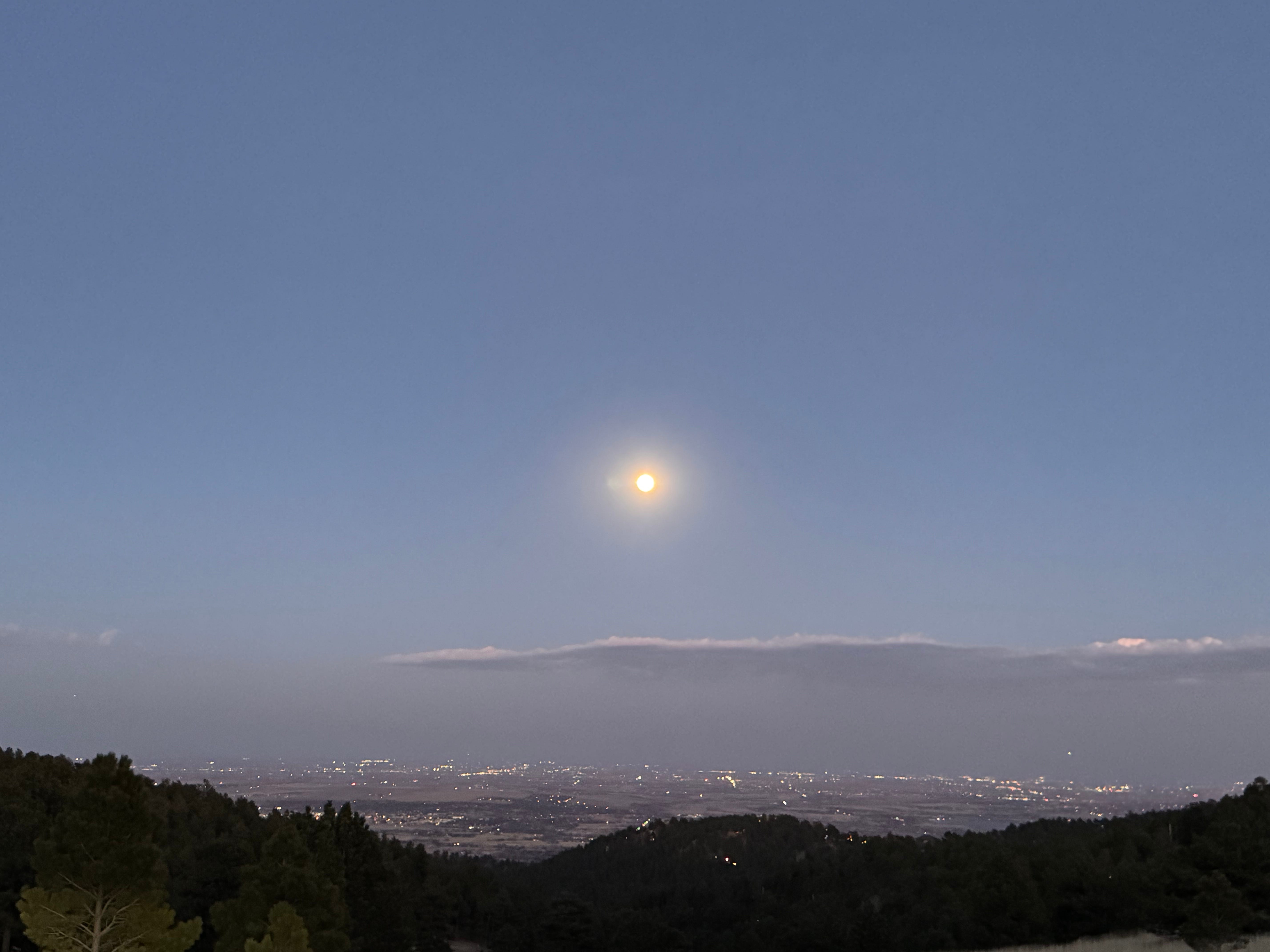
Meditating in the HOV Lane
A few thoughts on aligning your inner map of reality with the outer world.
Last week I posted “Roughly Right is Better Than Precisely Wrong,” which introduced a methodology I’ve been building for the past nine months. It maps causal chains, tracks leading indicators, and produces threshold-triggered decision points for leaders and investors operating in fast-moving environments.
A few people reached out to say it was useful. A few others reached out to say something like: wait, aren’t you the consciousness guy? The inner journey guy? What happened to you?
For the past seventeen years, my work has centered on the leader’s inner experience. The path of awakening. The expansion of consciousness. What it means to lead from presence and integrity when the signals around you are unclear and the stakes are personal. I believe deeply in this work. I’ve built my life around it.
And then last week I published an article about JOLTS readings and SaaS market crashes and causal chains with seven links and threshold triggers. Someone reading both kinds of pieces back to back might wonder whether I’d had some kind of pivot.
I haven’t. But I need to tell you about two kinds of fog before that makes sense.
The monk on the mountain
There’s a version of the awakening story that goes like this: you do the inner work, you find stillness, you rest in the present moment, and you release your attachment to the chaos of the external world. Peace comes from letting go of the need to know what happens next.
I believe that’s true. I also believe it describes a very specific set of conditions.
If you’re a monk on a mountaintop in Nepal, that path works beautifully. Your environment is stable. Not many variables. The present moment is genuinely sufficient because very little around you requires anticipation or response.
Most of us are living a different life.
The expansion of consciousness for the working leader, the founder, the parent, the community builder, happens inside families, organizations, and communities that are actively being reshaped by forces that confound most people. AI is restructuring employment patterns in real time. Entire market sectors are repricing in weeks, maybe days. Institutional norms that held for decades are bending. Complexity doesn’t pause while you meditate.
So what are we to do? What does it look like to be awake and engaged? Present and anticipatory? Grounded in your inner experience and clear-eyed about the forces acting on your world?
I’ll get to my answer. But first, the fog.
Two kinds of fog
I’ve worked closely with leaders on their inner lives for years. During that time I noticed something that I think matters enormously, and I never hear people talk about.
Leaders operate in two kinds of fog simultaneously.
The first is internal. Unprocessed emotion. Unexamined assumptions. Reactive patterns. A nervous system running in chronic activation. This fog distorts everything. You see threats that aren’t there. You miss signals that are. You react to the wrong things at the wrong time. Clearing this fog is the work of self-awareness, contemplative practice, therapy, honest community. I’ve devoted my career to helping people do exactly this.
The second is external. It’s the gap between what’s actually happening in your environment and what you can perceive about it. The news gives you a skewed, intentionally dysregulating picture of reality. Traditional analytics give you a well-organized view of the past. Consensus forecasts tell you what everyone else already believes. The forces that shape your decisions over the next 12 to 24 months are mostly invisible to all three.
Here’s what I see when I watch brilliant, self-aware people make fear-based decisions: clearing the internal fog alone makes you calm. It does. You feel centered, present, at peace. And then something structural shifts in your environment that you didn’t see coming, and suddenly you’re making reactive choices from a place of surprise. All that inner work, and you’re still getting blindsided.
Meanwhile, clearing the external fog alone makes you informed. You can see the signals, read the trends, spot what’s forming. And every signal triggers your nervous system, because you haven’t done the work to process what you’re seeing from a grounded place. You end up anxious and well-briefed, which is its own kind of misery.
You need both cleared.
What ignorance costs
When leaders aren’t engaged with their environment in a clear-eyed way, two things happen. Both are expensive.
They miss structural shifts already underway. Changes moving through their causal chains link by link, producing signals that are visible to anyone who knows where to look. Missed because attention is elsewhere, or pointed at the wrong things.
And they burn enormous energy worrying about scenarios that were never structurally likely. The 24-hour news cycle is engineered to activate your nervous system. It’s very good at that job. But activation running on bad information is just anxiety wearing a suit. You lose sleep over headlines. You make defensive choices based on the loudest narrative. The actual causal structure points somewhere completely different, and nobody around you is tracking it.
This is the norm. Brilliant, committed, deeply self-aware people making decisions from fear because the information environment around them was designed to produce fear, and the analytical tools available to them were designed to produce precision about the past. Precision about the past and clarity about the future are different disciplines. The tools are different. The muscles are different.
Some people try to solve this problem by meditating harder. By going deeper inward, trusting that stillness will carry them through whatever happens externally. I respect that path. I also think, for anyone who leads people, runs organizations, or makes consequential decisions in a shifting environment, that approach leads to failure.
Finding the match
The inner work and the outer sensing are two halves of one practice.
Your inner map of reality is the foundation. Your values, your sense of purpose, your understanding of what matters and why. The contemplative traditions have extraordinary tools for clarifying this map. I’ve spent decades learning from those tools and I’m still learning.
But an inner map needs something to map onto. It needs contact with actual territory. And the territory right now is complex, moving fast, and full of emergent dynamics that don’t show up in breaking news or in a quarterly earnings call.
What I built with Hari is a way to read the territory. To find signal in noise. To know, with reasonable confidence, what’s forming around you, what could shift it, and when you’ll need to respond.
For a leader who’s done the inner work, this kind of signal clarity does something specific. It settles the part of you that worries about what you can’t see. When you know what’s structurally likely and what’s structurally unlikely, you stop spending energy on phantom scenarios. Your nervous system quiets. Your attention goes where it belongs. The actions you take come from alignment with your values, because you can actually see the field and choose your response from clarity.
That’s what engaged awakening looks like, at least in my experience. Present and aware of what’s forming. Grounded and responsive. Calm because you’ve done the inner work. Clear because you’ve done the outer work too.
The name, again
I mentioned last week that Hari is named in part for an epithet of Vishnu. The one who takes away darkness and illusion. I meant that literally. That’s what I’m trying to do.
The darkness, for most leaders, isn’t a shortage of data. It’s a shortage of signal. Too much information, organized in ways that bury the underlying structure. And the illusion is the belief that precision about the past produces clarity about the future.
When I trace a causal chain and identify leading indicators at each link, I’m doing the same thing I’ve always done in my work with leaders. Looking for the pattern underneath the noise. Asking: what’s actually happening here, and what does that tell us about what comes next?
The tools are different. The intent is the same.
One practice. Inner work. Outer sensing. The match between your map and the territory you’re operating in. Helping people find that match is the most useful thing I know how to do.
If you take the inner work seriously and you also need to make real decisions in a complex, fast-moving world, I think we have a lot to talk about.


